Camel farming is one of the oldest and most respected agricultural activities in the UAE. For many years, camels have been part of desert life, food, transport, and culture. Today, camel farming is not only traditional but also a growing business. Many people visit camel farms in Dubai and Abu Dhabi, and many farmers earn income from camel milk, breeding, and tourism.
This guide explains camel farming in simple English. It is useful for beginners, visitors, and people interested in business or farming in the UAE.
Read More: Goat Farming Business Plan in 2026
What Is Camel Farming?
Camel farming means raising camels for milk, meat, breeding, tourism, or cultural purposes. In the UAE, camel farms are usually well-managed and modern. Farmers focus on camel health, clean shelters, proper feeding, and regular care. Camel farms are found in desert areas where camels feel comfortable. These farms follow strict rules for animal care and hygiene.
Why Camel Farming Is Important in UAE
Camel farming is important for many reasons.
- Camels survive in hot weather easily.
- They need less water than cows.
- Their milk is healthy and valuable.
- Camel culture is deeply connected to Emirati history.
Because of these reasons, camel farms are supported and respected across the UAE.
Camel Farming Profit and Income
Many people ask: Is camel farming profitable? Yes, camel farming can be profitable if managed well.
Camel milk sells at a higher price than cow milk. Breeding camels are valuable. Tourism visits bring extra income. According to UAE agricultural experts, a healthy camel can produce 5 to 10 liters of milk per day, depending on care, feed, and health. This milk is sold fresh or processed into products. Farmers also earn from camel shows, farm visits, and breeding programs.
Camel Milk Farming in Dubai
Camel milk farming is growing fast in Dubai. Camel milk is rich in vitamins and minerals. Many people prefer it for health reasons.
Camel milk is used to make:
- Fresh milk
- Milk powder
- Chocolate
- Skincare products
Some famous camel milk brands operate near Dubai and supply products across the UAE.
The Camel Farm Dubai – A Popular Attraction
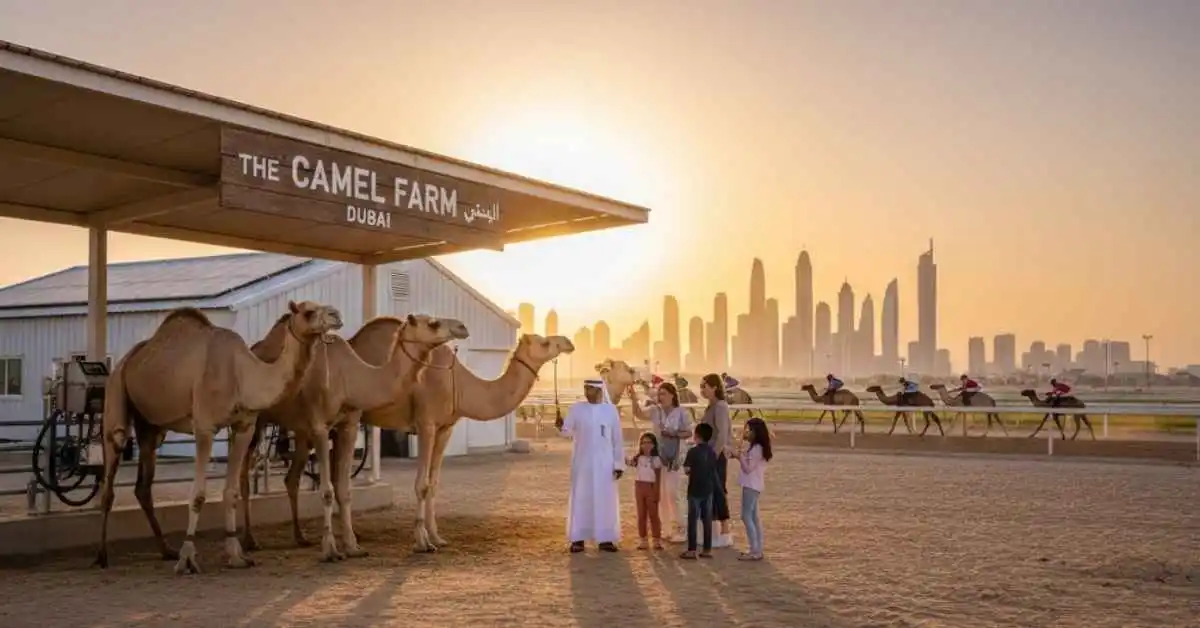
The Camel Farm Dubai is popular among tourists and families. People visit to see camels, learn about their lifestyle, and gain an understanding of desert farming.
During a visit, people can:
- See camels up close
- Learn about camel care
- Take photos
- Understand camel milk production
Camel farm visits help educate visitors and also support local farmers.
Camel Farm Abu Dhabi and Other Emirates
Camel farms are also common in Abu Dhabi and other parts of the UAE. These farms focus on breeding, milk production, and cultural preservation. Abu Dhabi camel farms are usually larger and more traditional. Many farms follow government guidelines for animal welfare and farming safety.
Camel Farm Near Me: How People Find Farms
People often search for camel farms near their location. Most camel farms are located outside city centers in desert areas.
Visitors can find farms by:
- Searching local maps
- Asking tour operators
- Checking farm websites
- Using travel guides
Many farms allow visits with permission.
Best Time to Visit Camel Farms in UAE
The best time to visit camel farms is during cooler months.
- October to March is ideal.
- The weather is pleasant.
- Camels are active.
- Outdoor visits are comfortable.
Summer visits are possible but usually limited to early mornings.
Camel Farming Process
Camel farming follows basic steps. Camels are given clean shelters. Fresh water is provided daily. Feed includes hay, grains, and natural plants. Veterinary checkups are done regularly. Clean space and routine care help camels stay healthy and productive.
Camel Farming Costs and Care
Camel farming needs patience and care.
Initial costs include:
- Buying camels
- Building shelters
- Feeding
- Medical care
Regular care reduces disease risk and increases milk production. Healthy camels live long and stay productive for many years.
Camel Farming and Local Culture
Camel farming is not just a business. It is part of UAE culture. Camels are respected animals and appear in festivals, races, and national events. Farms help preserve this tradition while using modern methods.
Camel Farming Table (Simple Overview)
| Aspect | Details |
| Climate | Hot and dry |
| Milk Production | 5–10 liters per day |
| Best Visit Time | October to March |
| Main Income | Milk, breeding, tourism |
| Location | Dubai, Abu Dhabi, UAE |
Challenges in Camel Farming
Like any farming business, camel farming has challenges.
- High initial cost
- Need for skilled care
- Hot weather management
- Market competition
However, with proper planning and care, these challenges can be managed.
Why Camel Farming Is Growing
Camel farming is growing because People trust the quality of camel milk. Tourism is increasing. Traditional farming is respected. Government support exists. These factors make camel farming a strong and stable option.
Conclusion
Honestly, if you are living in the UAE or just visiting for a few days, you really should visit a camel farm at least once. I know, many people think it’s just about animals and sand, but it’s much more then that. For me, it’s about the peace you find there, away from the city noise.
I remember the first time I tried fresh camel milk, the taste was… well, different! But now, I totally get why it’s so popular. If you’re thinking to start this as a business, my advice is don’t just look at the profits. Take care of the animals first, and the rest will follow. It’s a beautiful tradition, and we should keep it alive. Anyway, hope this guide helps you out!